Engineering Services
DfAM review, GD&T risk checks, and release evidence for metal additive programs
Velo3d supports engineering teams before a metal 3D printing order becomes a production risk. The service is built for aerospace, defense, energy, medical-device, and advanced hardware groups that need more than a printed geometry. We review whether the part belongs in additive manufacturing, how the build can be controlled, which features can actually be inspected, and what evidence must travel with the finished hardware. The result is a technical path that sourcing, quality, and design engineering can evaluate together.
Program intake
Manufacturability is checked before quotation language hardens
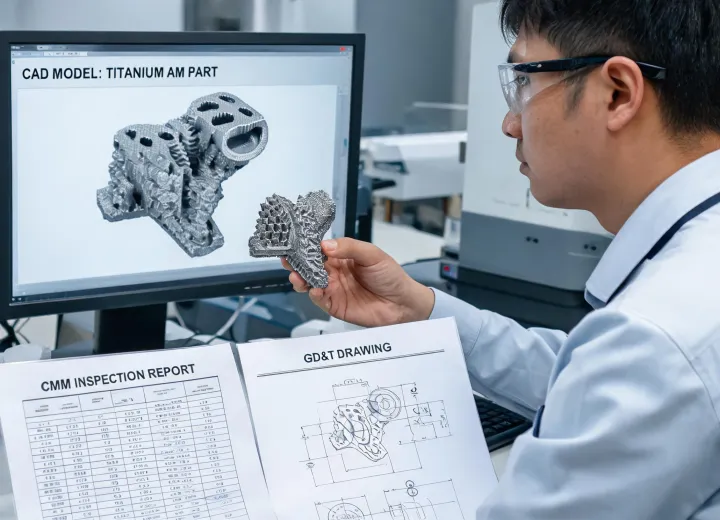
Each review starts with CAD, drawing notes, alloy targets, acceptance criteria, and business timing. Engineers flag unsupported spans, enclosed-channel powder removal, thin-wall distortion, datum access, heat-treatment impact, post-machining stock, and inspection blind spots. When additive is not the right process, the response says so. When the geometry is a fit, the quote assumptions become specific: build orientation, support concept, coupon plan, post-process route, dimensional report depth, and release package requirements.
- Geometry risk registerCritical features are translated into build and inspection risks instead of generic feasibility language.
- DfAM recommendationsWall thickness, lattice, manifold, thermal, and support changes are documented so design teams can revise with confidence.
- Acceptance planningFAI, CMM, optical scan, CT, material certificate, and surface roughness evidence are matched to the application.
Engineering controls
What the review package can include
Design and build strategy
Inputs reviewedSTEP, STL, 3MF, native CAD, 2D drawings, alloy targets, pressure or flow requirements, and revision history.
Technical checksOverhangs, supports, internal channels, thermal mass, residual stress, powder removal, datum cleanup, and machining allowance.
Quality and release evidence
Inspection routeCMM plan, optical scan, CT by requirement, coupon strategy, surface roughness checks, and customer-source inspection notes.
Release documentsFAI report, material certificate, build traveler, heat-treatment record, nonconformance notes, and retained inspection data.
How decisions move from concept to controlled build
The engineering service is deliberately evidence-led. A launch hardware buyer may care about internal channels and ITAR routing. A turbine or energy team may care about high-temperature alloy behavior and post-process stability. A medical device group may care about documentation discipline and repeatable surface condition. Velo3d keeps those requirements visible from the first review, so the program does not rely on optimistic print assumptions that collapse during inspection or procurement approval.
Send a geometry package for engineering review
Attach CAD, drawings, material targets, and acceptance criteria. We will return manufacturability risks, quote assumptions, and the evidence path needed for approval.